
The Reclining Buddha Bangkok is one of the most famous cultural landmarks in Thailand and a must-visit attraction for travelers exploring the capital. Located inside Wat Pho, officially known as Wat Phra Chetuphon Wimon Mangkhalaram Rajwaramahawihan, the magnificent Buddha image is famous for its enormous size, beautiful golden finish, and detailed mother-of-pearl decoration on its feet. Wat Pho is located next to the Grand Palace in Bangkok’s historic district.
For first-time visitors, seeing the Reclining Buddha at Wat Pho is an opportunity to experience Thai Buddhist culture, traditional architecture, history, and art in one remarkable destination.
About the Reclining Buddha
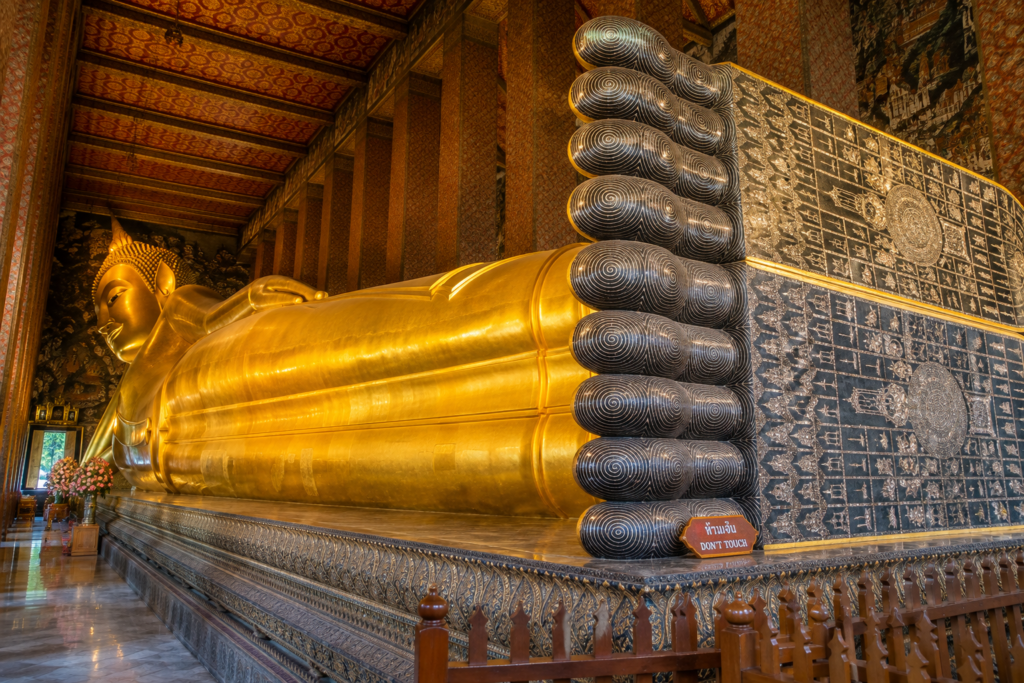
The Reclining Buddha, known officially as Phra Buddha Saiyas, is one of the most recognizable attractions at Wat Pho. According to the official Wat Pho website, the image belongs to the early Bangkok period and is constructed from brick and stucco, then lacquered and gilded. It measures approximately 46 meters in length and 15 meters in height from the base to the topknot.
The Buddha is depicted in the traditional “Lion Sleep” position, creating a peaceful and impressive appearance. Its enormous size is one of the first things visitors notice when entering the hall.
Although the Reclining Buddha is a major tourist attraction, it remains an important religious image and object of worship. Visitors should therefore treat the temple and Buddha image with appropriate respect.
Wat Pho – Temple of the Reclining Buddha
Wat Pho is widely known as the Temple of the Reclining Buddha and is one of Bangkok’s most important historic temples. The Tourism Authority of Thailand includes Wat Pho among the city’s major historical and religious attractions.
The temple complex contains much more than the famous reclining statue. Visitors can explore beautifully decorated buildings, stupas, sculptures, murals, chapels, and numerous Buddha images.
The Reclining Buddha Hall is located in the northwestern part of the monastic area. The official Wat Pho website notes that the hall was specifically constructed over the reclining image and features elaborate architectural and decorative details.
Exploring the wider temple complex gives visitors a better understanding of Thailand’s artistic and religious traditions.
The Famous Feet of the Reclining Buddha
One of the most photographed features of the Reclining Buddha Wat Pho is the enormous soles of its feet.
The feet are decorated with intricate mother-of-pearl inlay representing 108 auspicious symbols associated with Buddhist traditions. The official Wat Pho website describes these symbols as including representations connected with fortune, prosperity, royal attributes, and Buddhist cosmology.
The detailed artwork makes the feet an important highlight for visitors interested in Thai art and religious symbolism.
When visiting, take time to look closely at the patterns rather than viewing them only from a distance. The intricate craftsmanship is much easier to appreciate when you observe the individual designs.
History of Wat Pho
Wat Pho has a long connection with Bangkok’s history and the development of the early Rattanakosin period.
The temple underwent major development and restoration during the reign of King Rama III, including the construction of the hall associated with the Reclining Buddha. The official Wat Pho website notes that King Rama III ordered the construction of many sections of the temple, including the Reclining Buddha.
The temple’s architecture and murals provide an important visual record of Thai cultural and religious traditions. Inside the Reclining Buddha hall, visitors can see traditional mural paintings depicting Buddhist stories and historical themes.
Wat Pho Architecture
The Wat Pho architecture is another reason to visit this historic Bangkok attraction. The temple complex features colorful roof tiles, golden decorations, detailed murals, sculptures, and traditional Thai design.
Visitors can discover numerous decorative elements throughout the grounds. Chinese sculptures and other artistic features also form part of the temple’s distinctive character. The Tourism Authority of Thailand highlights the Reclining Buddha Hall, its unique decoration, mother-of-pearl details, and ancient Thai cultural murals as key highlights.
For photography enthusiasts, Wat Pho offers many opportunities to capture architectural details, Buddha images, decorative patterns, and colorful temple structures.
Why Visit the Reclining Buddha Bangkok?
There are several reasons to include the Reclining Buddha Bangkok in your travel itinerary.
First, the enormous scale of the statue makes it an unforgettable sight. Second, its detailed decoration provides an insight into Thai artistic traditions. Third, the surrounding Wat Pho complex allows travelers to experience Buddhist architecture and history beyond the main statue.
The location is also convenient because Wat Pho is situated beside the Grand Palace. This means travelers can combine several famous Bangkok tourist attractions in one sightseeing trip.
Best Time to Visit Wat Pho
The official Wat Pho website currently lists visiting hours as 08:00 to 19:30 and provides current admission information.
Because opening information and visitor arrangements can change, it is advisable to check the official Wat Pho website before traveling.
Morning can be a comfortable time to begin sightseeing, particularly if you plan to visit several nearby attractions during the same day. Bangkok can become hot during the afternoon, so comfortable clothing, water, and suitable footwear can make your visit easier.
Wat Pho Dress Code and Visitor Etiquette
Wat Pho is an active religious site, so visitors should dress respectfully. The official temple guidance asks visitors to dress politely and states that shorts are not permitted in certain circumstances. Visitors should also remove their shoes before entering religious buildings.
Photography is generally possible in temple areas, but visitors should follow posted restrictions and avoid disturbing people who are worshipping.
Remember that the Reclining Buddha is a sacred image. Visitors should behave respectfully, keep noise to a minimum, and avoid inappropriate poses or actions around the statue.
Places to Visit Near the Reclining Buddha
One of the biggest advantages of visiting Wat Pho Bangkok is its location. Travelers can easily combine their visit with several other major attractions.
Grand Palace
The Grand Palace Bangkok is located next to Wat Pho and is one of Thailand’s most famous royal landmarks.
Wat Arun
Across the Chao Phraya River, Wat Arun Ratchawararam, also known as the Temple of Dawn, offers impressive riverside architecture.
Chao Phraya River
The river is an important part of Bangkok’s history and provides scenic transportation between several historic attractions.
The Tourism Authority of Thailand highlights Wat Pho, Wat Arun, the Grand Palace, and other historic sites among Bangkok’s key attractions.
Explore Bangkok with Woodlands Inn
If you are planning a Bangkok holiday, visiting the Reclining Buddha at Wat Pho should be part of your sightseeing itinerary. The combination of history, Buddhist culture, traditional Thai architecture, and artistic craftsmanship makes Wat Pho an unforgettable destination.
Travelers staying at Woodlands Inn can explore Bangkok’s many attractions, including the Grand Palace, Wat Arun, Wat Pho, museums, markets, shopping areas, and riverside destinations.
Whether you are visiting Bangkok for the first time or returning to discover more of Thailand, the Reclining Buddha Wat Pho offers a memorable cultural experience.
Add Wat Pho and the Reclining Buddha to your Bangkok travel itinerary and discover one of Thailand’s most impressive and historically significant Buddhist landmarks.